
PowerShell es una herramienta base y fundamental para administradores de sistemas (Sysadmin) y cualquier apasionado/a de la tecnología.
Diseñado por Microsoft, este scripting language avanzado combina la flexibilidad de la línea de comandos con el poder de la programación orientada a objetos.
Desde gestionar sistemas operativos hasta automatizar tareas complejas, PowerShell se ha convertido en un estándar para la administración moderna en IT. En este artículo, aprenderás cómo se puede aprovechar al máximo sus capacidades.
Cómo usar Cmdlets en PowerShell para gestionar tu sistema
Una de las características más destacadas de PowerShell es el uso de cmdlets (“command-lets”) que son pequeños comandos diseñados específicamente para interactuar con el sistema operativo Windows y realizar tareas administrativas.
The cmdlets son fáciles de usar y extremadamente flexibles. Por ejemplo, con Get-Process, puedes listar todos los procesos en ejecución en tu máquina, mientras que Stop-Process te permite finalizar procesos específicos. Además, PowerShell incluye cmdlets para gestionar servicios, usuarios, registros de eventos entre otras acciones.
These cmdlets, al ejecutarse en la línea de comandos, se convierten en un elemento fundamental para los/as administradores de sistemas para poder realizar tareas de manera eficiente y rápida.
Un ejemplo básico para gestionar servicios es:
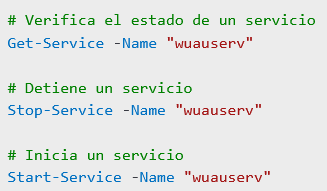
Gracias a este enfoque, que es intuitivo y funcional, es posible controlar y monitorear los componentes del sistema sin necesidad de interfaces gráficas.
Primeros pasos con PowerShell y conceptos clave


 Español
  English (UK)