
We define image recognition as a process carried out by technology with the aid of the artificial intelligence to identify regular patterns in graphical data, and then classify them into categories and interpret sets of pixels as a whole.
These days, users are sharing data in the form of images left, right and centre via apps, social media and websites. With the rise of smartphones and their built-in high-resolution cameras, the number of images and videos being generated has skyrocketed to astronomical levels. For example, it is estimated that more than 50 trillion images have been uploaded to Instagram since its launch.
This flood of images has led to a growing need for to process and analyse this vast amount of visual data. This is where AI-powered image recognition comes into play – a revolutionary technology that has added value in a range of fields, from industrial automation to medicine and security, and which still has much to reveal.
In this Euroinnova article, we explain in great detail how image recognition works and how it can be used in various fields.
How image recognition works
The entire process of image recognition carried out by a machine using artificial intelligence can be divided into the following steps: data collection, image pre-processing, pattern detection, training, testing and deployment.
Below, we’ll tell you a bit more about these steps:
Data collection
The first essential step in image recognition is to compile a a sufficiently large and representative dataset to train the artificial intelligence model. This data may come from a variety of sources, such as manually labelled images, public databases, social media, or footage from cameras and sensors.
Image pre-processing
Before inserting the images into the model, they need to be pre-processed to ensure their quality and consistency. To this end, various operations are carried out, such as adjusting the size and resolution of the images, normalising pixel intensities, correcting brightness and contrast, removing noise, and applying other techniques to improve quality and facilitate feature extraction.
Pattern recognition
At this stage, techniques such as machine learning, particularly deep learning or deep learning (convolutional neural networks or CNNs), to extract relevant patterns from the images.
Neural networks learn to identify features such as edges, textures, shapes and colours from the training data, which are then converted into numerical representations that enable the model to distinguish between different objects and elements in the images.
Training
Once the features have been extracted and the data has been prepared, the process of training the image recognition model begins. During training, The model is trained using the images and their corresponding labels, and adjusts its internal parameters to minimise the error between the predictions and the actual labels. This iterative process it is repeated many times until the model achieves an acceptable level of accuracy.
Testing
The trained model must be evaluated to assess its performance on data it has not seen before. To do this, a separate set of images called the test set is used. The model performs predictions in these images and are compared with the actual labels to calculate performance metrics, in order to ensure that the model generalises well and delivers correct outputs beyond the data with whom he had previously trained.
Deployment
At this stage, the model can be integrated into applications, systems or devices to perform real-time image recognition tasks. Depending on the use case, the model can run in the cloud or on local devices, such as smartphones, cameras or robots.
Applications of image recognition using artificial intelligence
Whilst image recognition has led to some very impressive advances that have become widespread in the world of design, it also has the potential to be harnessed for other applications across various sectors to improve our quality of life.
So, here’s how image recognition is revolutionising – and could continue to revolutionise – our daily lives:
Facial recognition as a security measure
It has been integrated into security systems, such as unlocking smartphones via facial recognition, or in access control systems in buildings and airports. It is also used on social media to automatically tag people in photos.
However, this technology continues to is the subject of debate over privacy and ethical issues in its use, which has led some countries to impose certain restrictions on the application of image recognition.
In the future, greater accuracy is expected in dealing with variations in lighting and facial expressions, as well as an appropriate balance between usability and privacy protection.
Anomaly detection in medical analysis
Artificial intelligence has proven its worth in detecting anomalies in medical images, such as X-rays, computed tomography (CT) scans and magnetic resonance imaging (MRI) scans. These systems can to help doctors identify signs of diseases or conditions at an early stage, streamlining diagnosis and patient care.
Although this technology is not yet very advanced and has not yet been implemented in healthcare systems, it is expected that in the future it will become fully functional and part of doctors’ daily routine.
Enhancing virtual reality
VR devices are currently popular in entertainment, education and training, and have been used in fields such as flight simulation and architectural design. Virtual reality systems rely on artificial intelligence-based image recognition to track the user’s movements and enable interactions between reality and the virtual environment via cameras and sensors.
Increased production in industrial processes
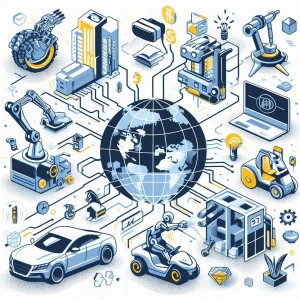
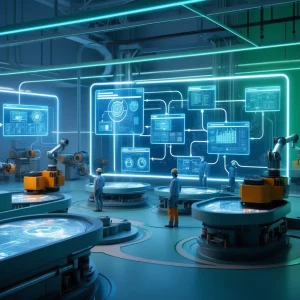
Robots fitted with vision systems deliver high precision and efficiency on industrial production lines, as detect objects, sort products, carry out quality checks and work safely alongside human workers, reducing the need for human intervention.
The secondary sector of the economy has always been the one to experience the most significant impact of technological innovations in process automation; consequently, this sector, driven by robotics, was never going to be left behind when it came to cutting-edge developments such as image recognition using artificial intelligence.
Support for the operation of autonomous cars
Computer vision systems enable autonomous vehiclesto identify and track objects in real time, such as pedestrians, vehicles, road signs and obstacles on the road. Autonomous vehicles are already being tested, and some are in limited operation in certain areas, but it is expected that their introduction onto the roads and widespread adoption will become a reality in the near future.



 Español
  English (UK)
  Français