
A deepfake is any multimedia content (images, videos or audio) that has been generated using AI for the purpose of to falsely impersonate someone. Deepfake technology is not as new as one might think.
In fact, there is a famous case of Fast & Furious 7, which used CGI (computer-generated imagery) to temporarily bring Paul Walker back to life – the famous actor who died in a car crash in 2013.
However, when we talk about deepfakes, we are not referring to special effects or simulations of other people in video games or television series, but rather to morally dubious forgeries driven by malicious intent, such as spreading fake news or deceiving people simply for the sake of entertainment.
What are the purposes of deepfakes?
As you might suspect, deepfakes can be created for a variety of purposes, none of which are particularly good:
- Defamation and character assassination: Creating fake videos to discredit people, whether they are public figures or not, by putting words in their mouths that they have never spoken or attributing to them actions they have never carried out.
- Extortion and blackmail: To create fake content in order to extort or blackmail individuals, threatening to publish such compromising material if they do not comply with certain demands.
- Disinformation (fake news): To spread false information in order to manipulate public opinion, influence elections or cause social unrest by referring to events that never took place.
- Pornography: Creating fake pornographic videos using a person’s image without their consent, which can cause considerable harm to their reputation and emotional wellbeing.
- Fraud and scams: Impersonating someone using deepfakes in financial transactions, job interviews or any situation where identity verification is required.
- Fabrication of evidence: To produce visual or audio evidence to be used in criminal proceedings to falsely incriminate someone for an offence with serious legal and personal consequences.
How are deepfakes created?
Creating deepfakes is relatively complicated, as it requires specialist knowledge deep learning algorithms and know how to implement them correctly. Firstly, you need to collect a large number of images or videos of the person you wish to imitate. These images serve as training data for an AI model, specifically a neural network.
The most popular neural network for generating deepfakes is called generative adversarial network (GAN). A GAN consists of two parts: a generator and a discriminator. The generator creates synthetic images based on the training dataset, whilst the discriminator evaluates these images and compares them with real ones to determine their authenticity.
As the training process and two-way feedback continue, the generator gradually creates fake images that are becoming increasingly similar to the originals, and the discriminator becomes more efficient at distinguishing between fake and genuine images.
Once the model has been sufficiently trained and fine-tuned, fake videos can be created by superimposing the face of the fake person onto another person’s body.
How can I tell if I’m looking at a deepfake?
Whilst artificial intelligence has improved its performance and continues to evolve at a dizzying pace, it is not perfect. That is why many deepfakes may contain certain flaws – some more obvious, others more subtle – which we can spot to determine whether we are looking at a deepfake:
- Pay attention to the face: Blinking is something that comes naturally to us humans. However, AI sometimes fails to produce a natural blink, so this is a tell-tale sign we can look out for. Furthermore, the audio and lip-syncing are often out of sync. The gaze in deepfakes can appear lost or disoriented.
- Skin quality: AI often creates textures that are too perfect. As a general rule, people do not usually have skin that is 100% smooth and even, especially as they get older, so a flawless or plastic-looking complexion can be a sign of a deepfake.
- Head-body coordination: Anatomy and psychomotor skills are complex, and AI has to take too many factors into account for everything to line up perfectly. Sometimes, deepfakes reveal flaws in the alignment of the head with the rest of the body as it moves.
- Shadows and highlights: In AI videos, shadows and highlights appear in places where they shouldn’t be.
- The fingers: For an illustrator or artist, fingers – especially those on the hands – are the most difficult thing to draw. If we’ve created images using artificial intelligence, we’ll soon realise just how odd AI-generated hands look.
Examples of deepfakes
Whilst there has not yet been any official scandal involving a deepfake that has had serious consequences, several deepfakes have gone viral and confused people due to their startling realism.
This Person Does Not Exist
This is the website https://thispersondoesnotexist.com/, in which, using a proprietary algorithm called StyleGAN2, the face of a person who literally does not exist is generated. These imaginary faces, set against different backgrounds, are generated by an algorithm trained on a colossal database of people’s faces.
An anecdote that went viral a couple of years ago in the midst of the pandemic was Miguel Lacambra’s deception.

This person was, allegedly, a journalist who published articles on an online news site and commented on current affairs on Twitter. Shortly afterwards, some Twitter users uncovered that the person in question Miguel Lacambra did not exist and his photo had been generated by ‘This Person Does Not Exist’.
Putin, the film
Patryk Vega, a Polish film director, posted on his YouTube channel Putin’s trailer, an autobiographical film about the Russian president. However, the lead role is not played by an actor who looks like Putin – and, obviously, it is not Vladimir Putin himself – but rather a deepfake generated by artificial intelligence. We do not know how the Kremlin will react, but, from what we have seen in the trailer, it is set to be a massive hit.
Fake photos of politicians and the Pope
If we look into it, there are several deepfakes that have gone viral and managed to overcome the audience’s scepticism. Although that video has now been removed from Facebook, a video of the American politician went viral Nancy Pelosi speaking as if she were drunk on camera. However, they later reported the platform so that the video would be removed, as it was a crude deepfake.
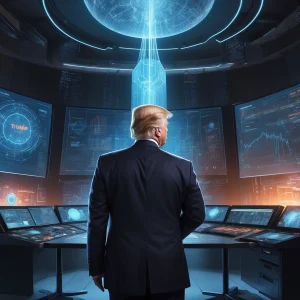
Other memorable moments provided by some of the more popular deepfakes have included those showing Donald Trump being arrested and those featuring the Pope. In particular, the ones featuring Donald Trump caused quite a stir because Many people believed the images were real because they were so well done. However, it wasn’t long before the truth came out.

The deepfake of the Pope that went viral worldwide was a photo of him with a quilted coat very eye-catching. It is hardly surprising that, shortly afterwards, the Pope suggested introducing appropriate regulations to address the threats posed by artificial intelligence.




 Español
 English (UK)