
The IoT sensors have become one of the cornerstones of today’s technological development. Thanks to them, it is possible to collect data from the environment, analyse it in real time and make automated decisions without human intervention. From smart homes to complex industrial systems, these sensors help to improve efficiency, reduce costs and optimise processes.
Understand What is an IoT sensor?, how it works and the contexts in which it is used are key for anyone interested in technology, automation or innovation. Below, we explore its most notable uses, benefits and examples within the context of the Internet of Things.
What is an IoT sensor?
An IoT sensor is a device that detects and measures physical variables in the environment such as temperature, humidity, pressure or movement, and transmits this data via a network. Unlike traditional sensors, IoT sensors are designed to operate in connected environments, facilitating real-time data analysis and enabling process automation.
These sensors are essential in so-called smart sensor networks, where multiple devices communicate with one another to collect information, identify patterns and optimise resources. The general characteristics of IoT sensors include their low energy consumption, wireless connectivity, small size and ability to integrate with analytics or artificial intelligence platforms.
What are IoT sensors used for?
IoT sensors have applications across a wide range of sectors. In industry, they enable the monitoring of machinery, the detection of faults before they occur, and the adjustment of processes to improve the Internet of Things efficiency. In the agricultural sector, they help to monitor irrigation, soil quality and weather conditions, thereby improving productivity and reducing waste.
In smart cities, they are used to measure air quality, monitor traffic and manage street lighting. They are also found in smart homes, where they can be used to switch lights on automatically, regulate the temperature and detect intruders.
Furthermore, IoT sensors are essential in the digital health, facilitating remote patient monitoring, the measurement of vital signs and the automation of real-time alerts. All these examples answer the question of what role sensors play within the IoT ecosystem: to facilitate data-driven decision-making.
An area of growing interest is the combination of IoT sensors with artificial intelligence. This integration improves the accuracy and autonomy of the systems and opens up new opportunities for those wishing to explore how to make money with AI. From the development of bespoke solutions to the creation of predictive models for businesses, sensors are an invaluable source of data that can be monetised in smart automation projects.
What are the benefits of IoT sensors?
IoT sensors offer a range of benefits, both in a business context and in people’s personal lives. The main advantages include:
- Real-time connectivity: the data is sent and analysed instantly, enabling immediate responses to any changes.
- Energy and operational efficiency: they enable processes to be automated, consumption to be reduced and problems to be anticipated.
- Scalability: they can be easily integrated with other IoT devices in large, complex networks.
- Cost reduction: by optimising processes and minimising human error, costs are reduced in the medium and long term.
- Data-driven decision making: they provide accurate and ongoing information to help implement more effective strategies.
These benefits explain why more and more companies are taking an interest in IoT sensors and their ability to integrate with tools for adaptive learning or intelligent systems that automatically optimise processes.
Examples of the most popular IoT sensors
There are various types of IoT sensors, each designed to perform specific functions depending on the environment and intended use. Below is a list of some of the most commonly used ones today:
Types and examples of digital sensors
- Temperature sensor: measures the ambient or internal heat of a system. Used in smart homes, industrial refrigeration and air conditioning.
- Humidity sensors: very common in precision farming and HVAC systems.
- Proximity sensor: detects the presence of nearby objects without the need for physical contact. There are various types of proximity sensors (inductive, capacitive, ultrasonic, etc.).
- Motion sensor: used in security, lighting automation or presence detection.
- Pressure sensor: measures the force exerted by a fluid or gas. Very common in hydraulic systems and motor vehicles.
- Air quality sensor: detects pollutants, gases or CO₂ levels indoors or outdoors.
- Light sensor: adjusts the lighting according to the amount of natural light available.
- Level sensor: used to monitor the level of liquids or solids in tanks
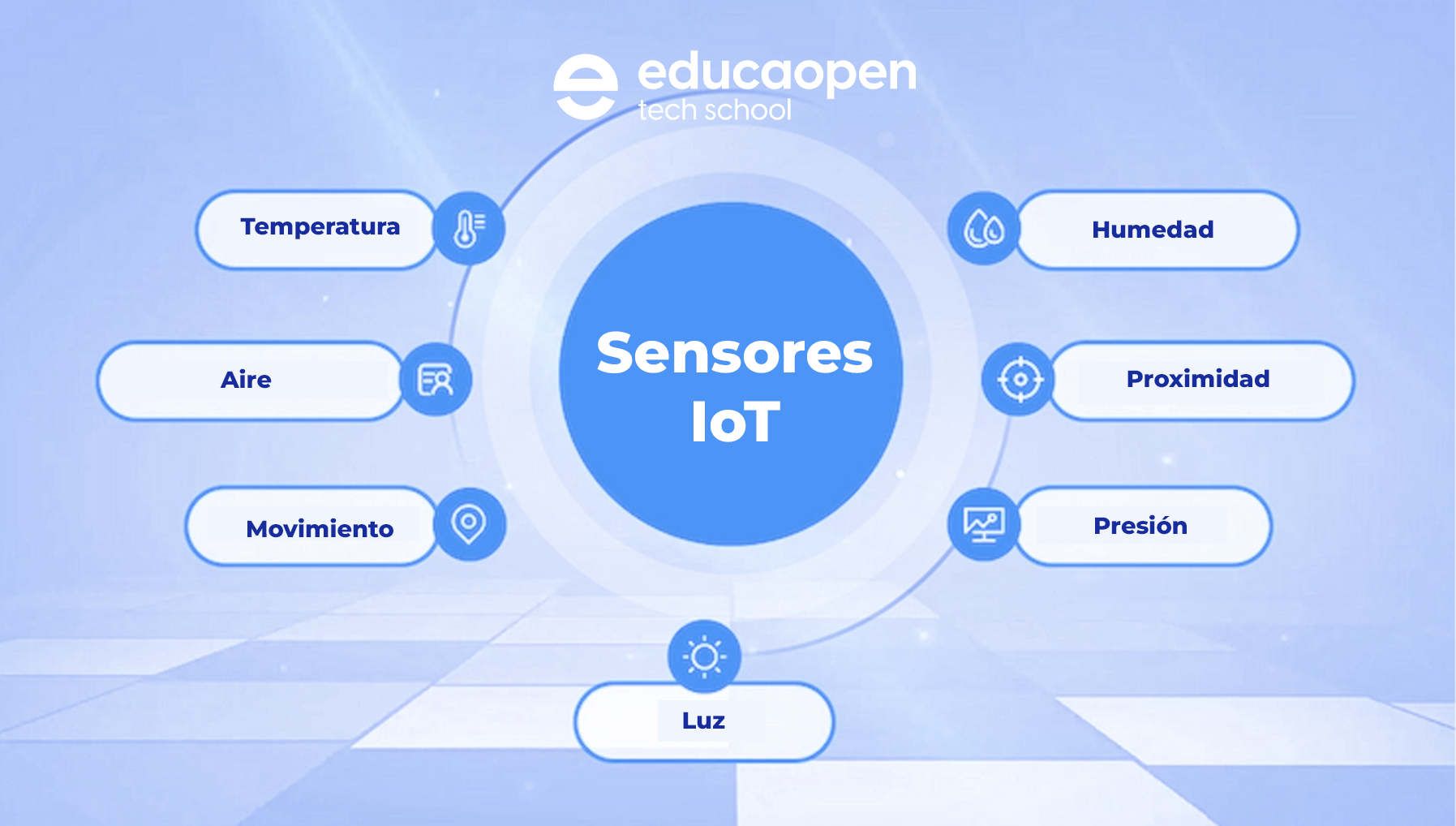
This list of digital sensors illustrates the wide variety of devices available within the IoT ecosystem. All of them perform vital functions in interconnected systems, enhancing their usefulness in sectors such as energy, transport, healthcare and home automation.
It is also important to bear in mind what the IoT devices where these sensors are usually installed. Some examples are:
- Smart thermostats
- Health watches and wristbands
- Security cameras
- Automatic dispensers
- Industrial robots
IoT sensors are at the heart of these devices, as they convert physical data from the real world into digital information that can be analysed, interpreted and used to take action.




 Español
 English (UK)