
Whilst it is open to debate whether teaching methods in many classrooms have progressed as much as they should have, it is undeniable that Educational technologies have changed the way we learn inside and, in particular, outside educational establishments.
The greatest impact of technology on education has been its democratisation and accessibility widespread. Previously, new knowledge was acquired mainly through physical books, which not everyone could afford and which were not available everywhere at all times.
Below, we’ll tell you about the educational technologies that have been emerging in the world of education, how they have radically transformed learning and teaching, and which developments will continue to shape the educational landscape. Euroinnova keeps you at the forefront of digital knowledge!
How have educational technologies changed the world of training?
We explain why educational technologies have brought about an irreversible shift in the way we understand the teaching:
They have made education more accessible
As we have already mentioned, there has never been a time when so many people have been able to train and access education so quickly and easily – and, above all, affordably. The growing range of companies specialising in online training (e-learning) has led to a making educational programmes more affordable, both online and face-to-face, which benefits students and the general public.
Nowadays, everyone has a vast amount of information just a click away in e-book format, audio, images, videos, etc. In addition, many educational programmes have been launched on the online market, such as micro-courses, podcasts, traditional undergraduate degrees, specialisation courses and others.
They promote collaborative learning
Technology demonstrates remarkable versatility in both teaching by the teacher and learning by the pupil when it comes to cooperation in collaborative environments.
When we talk about collaborative learning, we are referring to a situation in which Two or more students take part in a joint activity for educational purposes. These activities involve problem-solving, discussions, reflection and other forms of active participation that drive their learning process.
Whilst collaborative learning has always been a feature of traditional education, educational technologies such as computer applications for video conferencing and instant messaging are promoting collaboration between students and teachers in terms of both efficiency and frequency.
They have expanded the role of teachers in the classroom
Educational technologies enable teachers to move away from being the sole source of knowledge and authority in the classroom, and encourage them to take on a more supportive role.
Since the dawn of time, educational dynamics have worked as follows: teachers impart knowledge and students passively receive it. Of course, this is a simplification, and this educational model has undergone improvements over the centuries. Nevertheless, the structure of these dynamics always follows the same pattern.
However, thanks to educational technologies, pupils can discover new information, learn independently and do their homework with external support. The teacher is no longer the sole source of information, nor the figure who dictates a systematic method to solve questions or problems beyond doubt.
Teachers therefore not only have a responsibility to impart knowledge and ensure that pupils acquire it, but their aim is also to help pupils learn how to learn more effectively by making use of technology.
They facilitate learning strategies for children with special needs
In the past, educational methodology was a rigid, one-size-fits-all approach applied to all pupils without distinction. All pupils went through the same educational experience, even though, as we know, not all of them have the same abilities and educational needs.
In this regard, Many educational technologies are designed to be accessible to people with various disabilities. For example, there are programmes that can read text aloud for students with visual impairments or that offer tactile interaction options for those with motor difficulties.
Educational technologies and personalised learning
One of the challenges facing the world of education today is the personalisation of lessons for each pupil, as everyone learns at a different pace and in a completely different way.
Although it is impossible to devote personalised time and resources to each pupil in traditional education, educational technologies make it possible to take this personalisation a step further.
And the fact is that The power of personalised education lies in the data. The computers and devices used by pupils in their learning process continuously collect data on how they perform and how they learn, which can help members of the teaching staff to adapt the content and teaching methods used.
Thus, the educational process could be automated using algorithms that detect learning difficulties and offer solutions that are better suited to each pupil’s abilities and progress.
However, the personalisation of training has not yet been fully realised, so there is still a long way to go in terms of innovation and educational technologies.
Examples of educational technologies
Although new educational technologies have been gradually introduced into classrooms since the dawn of computing in the last century, innovations continue to emerge all the time. Some of them are already making their way into classrooms, whilst others still have a long way to go before they make a definitive breakthrough in the educational sphere.
Some examples of emerging educational technologies are:
Virtual Reality (VR) and Augmented Reality (AR)
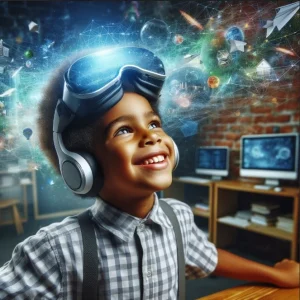
It is the most ambitious and eagerly awaited educational technology initiative of this digital age, and it will reach all schools sooner rather than later. These technologies enable create immersive experiences for students, where they can explore virtual environments or interact with objects and characters superimposed onto the real world. For example, they can take virtual tours of historic sites or carry out scientific experiments in a simulated environment.
Virtual assistants and educational chatbots
These artificial intelligence systems can provide answers to frequently asked questions, resolve queries and offer guidance to pupils outside school hours. An example of a chatbot that can meet extracurricular educational needs is ChatGPT. Although, in this case, a narrow form of artificial intelligence focused on the educational content to be taught would be required.
Educational robotics
It consists of robotics and programming kits that teach pupils how to build and programme robots, encouraging logical thinking, spatial intelligence and problem-solving. The overall aim of educational robotics is to introduce pupils to the world of STEM from an early age and to foster a curiosity about engineering and technology, which are thriving fields in today’s labour market.



 Español
  English (UK)